
Time zone squatters shouldn't complain about DST
1,000 United States Counties are in the wrong time zone. They shouldn't be able to choose "standard time."

It’s not often I am singing the praises of a Donald Trump initiative, but I am thrilled with the House vote to lock the clocks on Daylight Saving Time. I hope the United States Senate follows up with a quick vote for the Sunshine Protection Act, and Donald Trump gets this thing signed into law before the next scheduled time change in November.
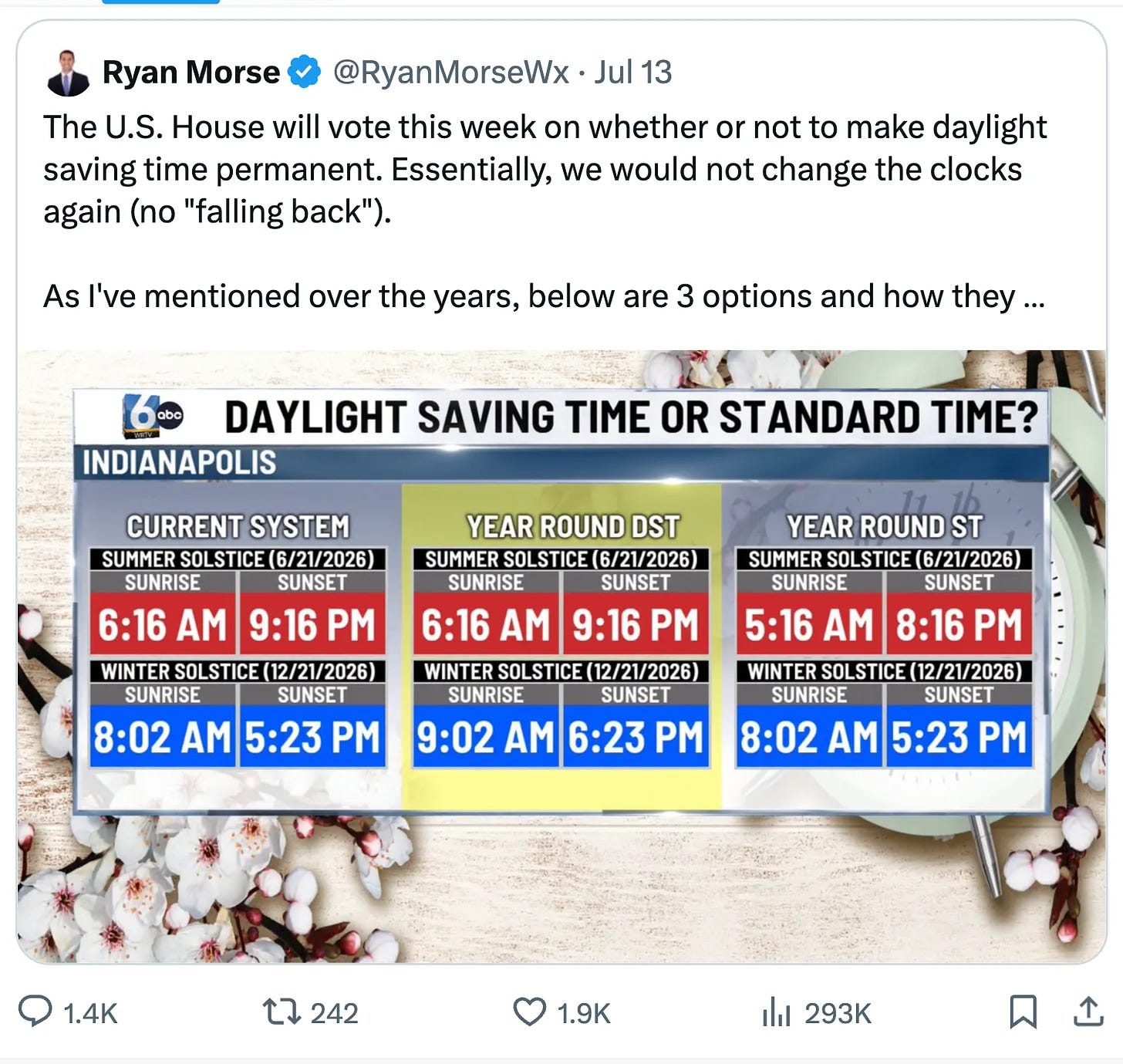
However, my Internet feed is filled with Red State folks who are livid at locking into Daylight Saving Time, and the loudest complaints are coming from Indianapolis. Weekday evening WRTV meteorologist Ryan Morse is being “retweeted” all over X by opponents of Daylight Saving Time. Their posts comparing year-round DST and year-round ST ignores the fact that Indiana doesn’t belong in the Eastern Time Zone. Indiana will never have standard time as long as they are in the Eastern Time Zone.
Ryan Morse and his friends in Indiana are ignoring the fourth and most important option: They are squatters in the Eastern Time Zone. They are too far west to experience standard time in the Eastern Time Zone. Their choice is really Eastern DST or Central DST.
There’s a science to time zones. The world’s time zones are centered on the Greenwich Meridian, known as the Prime Meridian, which runs through the middle of the Greenwich Observatory in London. It’s like a zero on a number line, expressed as 0°00′ (degrees and minutes) or 0.0° (decimal) Longitude.
Now for the math. There are 360 degrees in a circle. There are 24 hours in a day. We can create time zones by dividing the 360 degrees by 24 hours. Head east or west, every 15 degrees you lose or gain an hour.
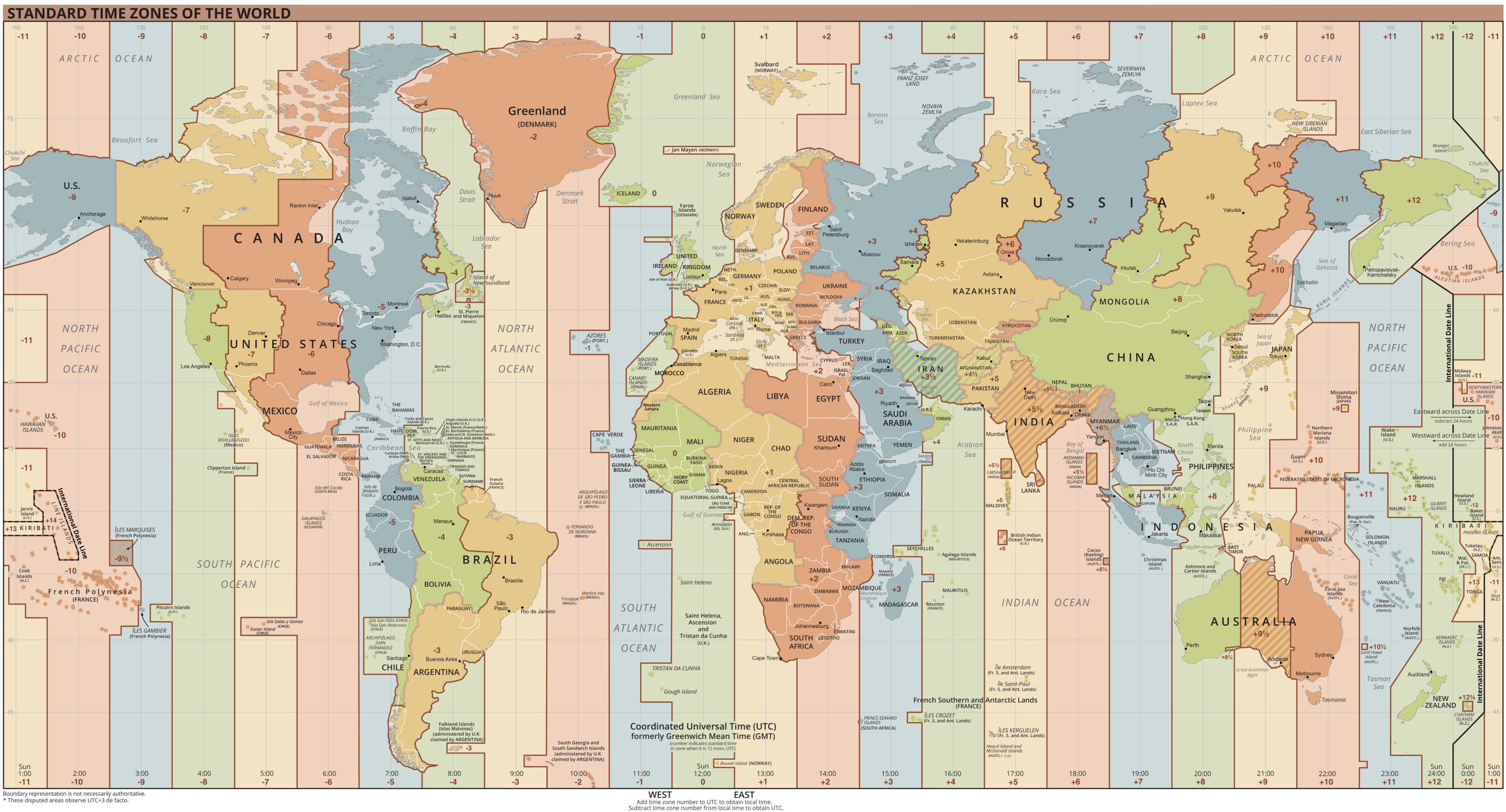
Every time you head west 15 degrees, solar noon is an hour later. Thus, solar noon at 75°W is five hours later than solar noon at the Prime Meridian. In the continental United States, there are four meridians that center time zones:
• Eastern Time midpoint: 75°W - Cherry Hill NJ, (a Philadelphia suburb).
• Central Time midpoint: 90°W - Fairview Heights IL (11 miles east of St. Louis
• Mountain Time midpoint: 105°W - Denver CO
• Pacific Time midpoint: 120°W - South Lake Tahoe CA.
If you’re in Philadelphia or St. Louis, life is good. High noon is only a couple of minutes from 12:00, and standard time is happy and standard. The problems come when you need to draw boundaries between the two time zones. It’s an easy mathematical exercise. Just head 7.5° west of center and draw the line. It’s an elegant map, but not without a few problems. Some of these boundaries bisect significant metropolitan areas, and that’s problematic.
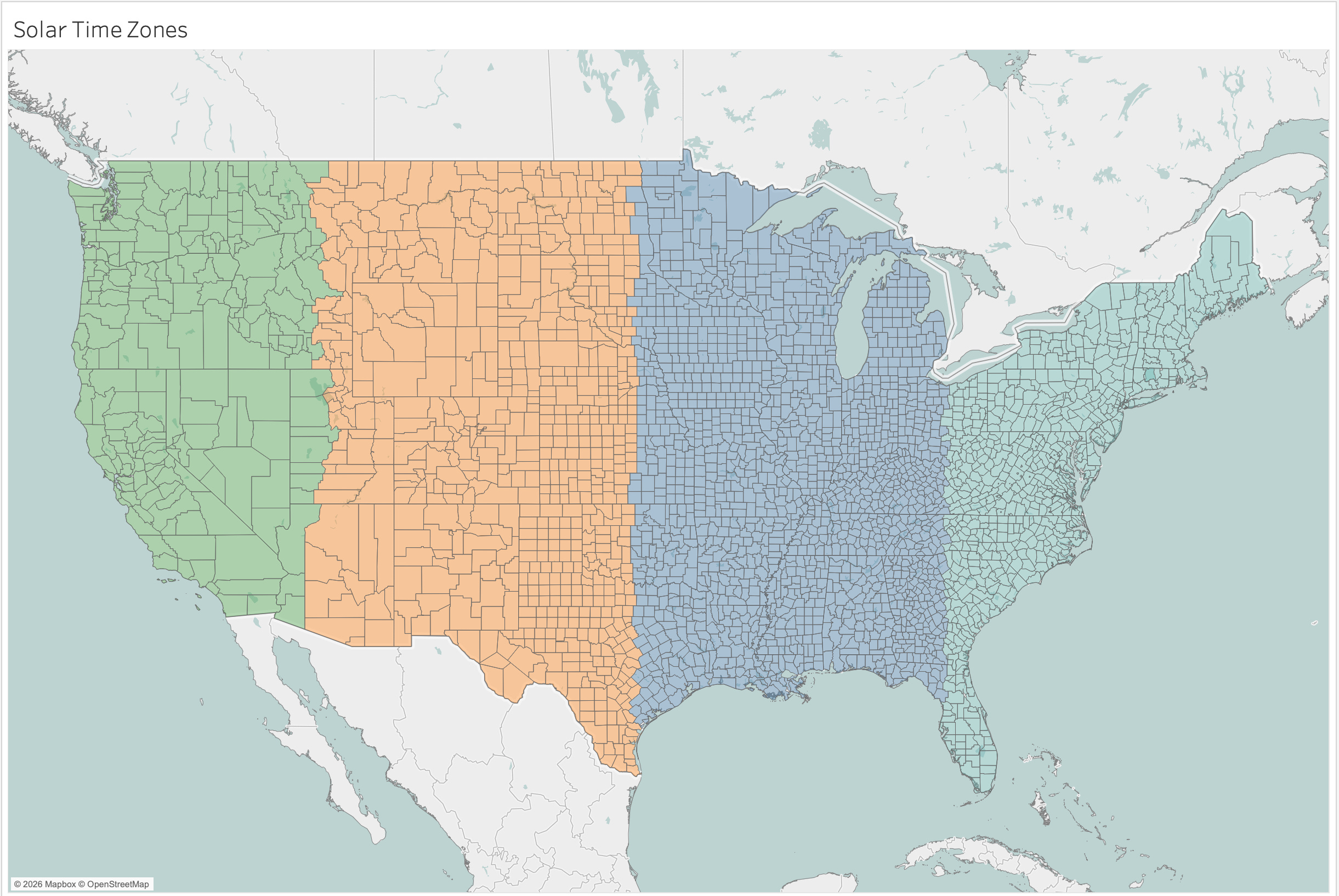
• Eastern-Central boundary (82.5°W): Hebron OH (which is 28 miles east of the state capitol in Columbus.)
• Central-Mountain boundary (97.5°W): - 9 miles west of downtown Wichita KS , and 12 miles west of Fort Worth TX.
• Mountain-Pacific boundary (112.5°W): Buckeye AZ, 25 miles west of downtown Phoenix.
When these pesky boundaries clashed with population centers, the solution was easy. Just move the boundary a little more to the west. Sometimes a little more became a lot more. The western half of Ohio slid from the Central to the Eastern Time Zone, along with most of Michigan and Indiana. Most of Texas slid from Mountain Time to Central Time. In all, 1,000 counties slid to the east, joining the neighboring time zone. These counties gained later sunrises and sunsets, the equivalent of Daylight Saving Time in their adopted time zones.
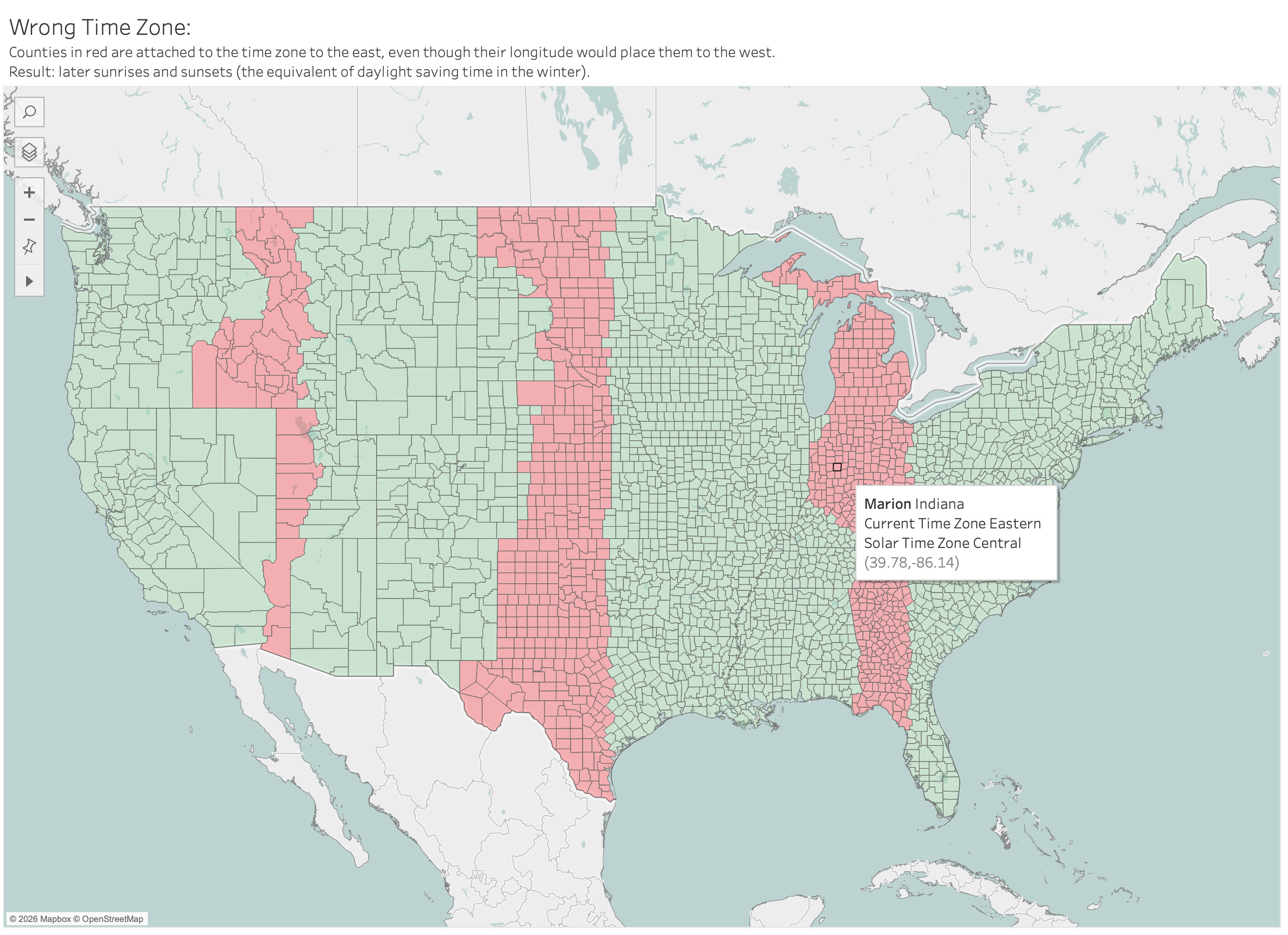
Which brings us back to Ryan Morse and his friends in Indiana. The Marion County Seat is 86.14°W longitude, almost 4 degrees west of the 82.5°W solar boundary.
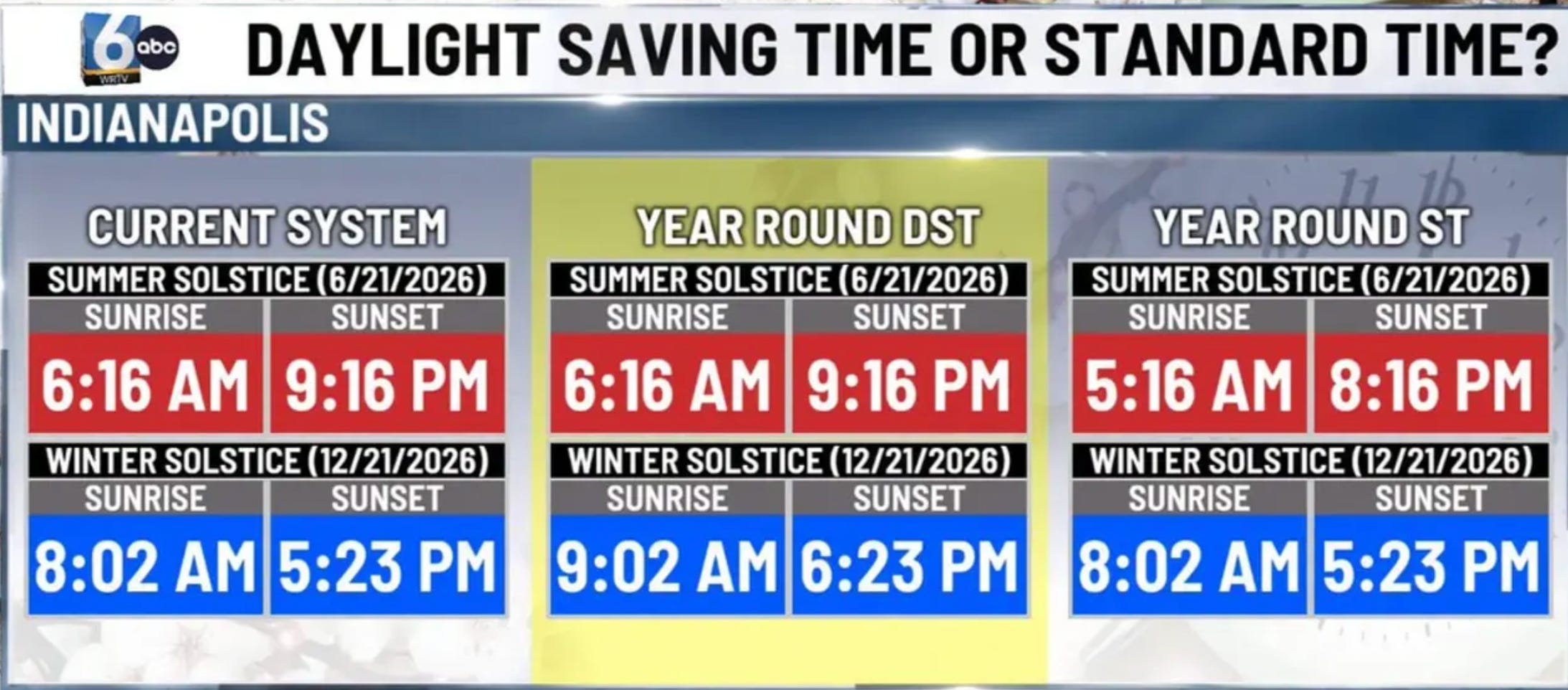
So, I invite Mr. Morse to adjust his three options. That center, yellow column? It’s Year-Round EASTERN DST. That right, grey column isn’t Year-Round Standard Time, it’s really Year-Round CENTRAL DST.
It is a distinction with a difference, because Indiana is squatting in the Eastern Time Zone. And those of us who live between 67.5°W and 82.5°W should only have standing to choose between Eastern Standard and Eastern Daylight time.
If Indiana attempts to force the Eastern Time Zone into standard time, they’ll get a huge fight from Boston, where a 4:11 p.m. Eastern Standard Time sunset is a miserable experience.
Boston: Permanent Daylight Saving Time
Summer Sunrise: 5:08 a.m.
Summer Sunset: 8:25 p.m.
Winter Sunrise: 8:04 a.m.
Winter Sunset: 5:11 p.m.
Boston: Permanent Standard Time
Summer Sunrise: 4:08 a.m.
Summer Sunset: 7:25 p.m.
Winter Sunrise: 7:04 a.m.
Winter Sunset: 4:11 p.m.